

Oil Products
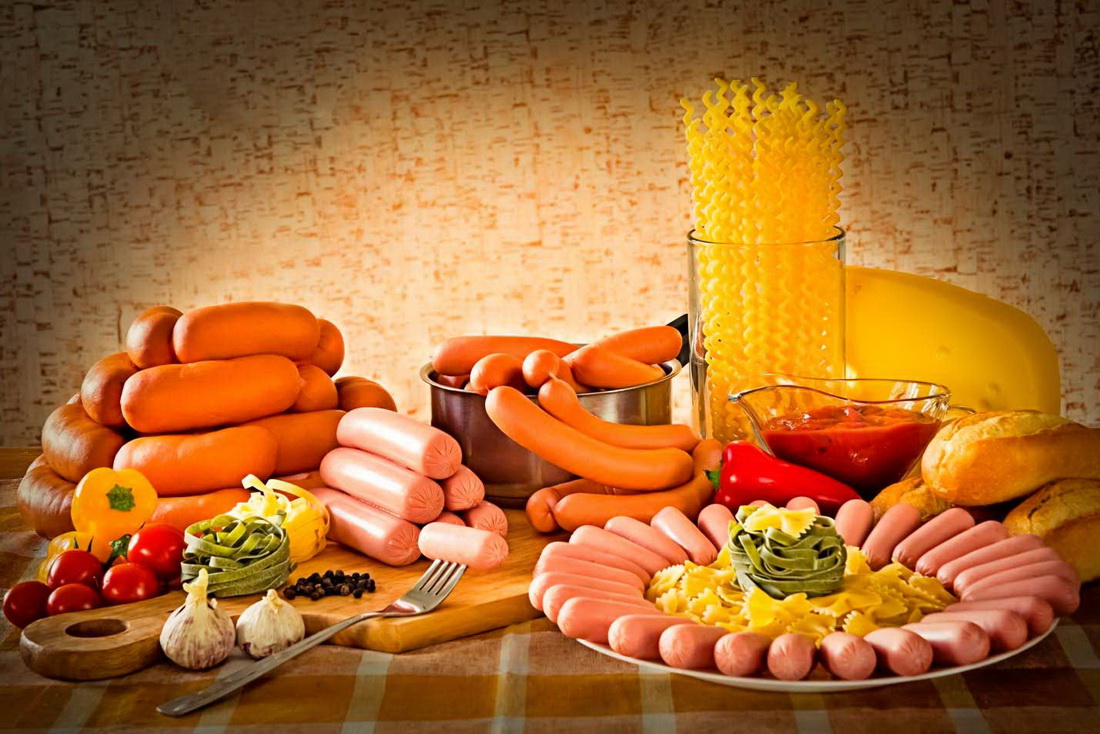
Can meat products be obtained artificially? It turns out that they can: our table features products derived from petroleum.
There is a noticeable deficiency of animal protein in the diets of populations in many countries around the world. More than 60% of the global population experiences a constant lack of food protein. Scientists have observed that in modern Russia, there is a threefold shortage of meat. With the help of scientific and technological progress, modern humans are trying to address the problem of insufficient food products by increasing livestock, fishing, and poultry productivity. The technologies for processing raw materials are being improved. However, year after year, the gap between the required amount and the consumption of products containing animal protein increases. Currently, the gap stands at over 6 million tons. Therefore, it becomes clear that no matter how livestock farming develops, it is unlikely that the gap in food protein deficiency can be substantially reduced.
But a way out of the situation has been found. To produce 25 million tons of protein, about 2% of the annual global oil extraction needs to be processed. This will allow feeding 2 billion people within a year. The processing of inexpensive raw materials, available without restrictions, into animal protein using microorganisms is called microbiological synthesis. This production technology was developed as far back as the 1960s. At that time, several European companies developed technology for growing microbes from petroleum hydrocarbons – thus, protein from single-celled organisms was obtained. A technological breakthrough occurred when a product consisting of dried microbial biomass grown on methanol was obtained.
Sausages, baloney, ham…
It is known that in 1989, when it was still the USSR, the production of artificial protein substances exceeded 1 million tons per year. In modern Russia, the production of protein surrogates has sharply increased due to high profitability. Currently, virtually all meat in industrial minced meat products is made from protein surrogates. Artificial meat products are used to create items that imitate meat, such as beefsteaks, cutlets, sausages, baloney, ham, and much more. Of course, obtaining “real” meat this way is impossible, but making minced meat and products from it is quite simple. The only thing modern producers can boast about is that the main components and fillers for analogs of meat products are harmless and balanced according to physiological norms and needs.
Besides meat…
In addition to meat products, artificial milk and dairy products (made from emulsions of cheap vegetable fats) are produced, as well as pasta, cereals, potato chips, various confectionery pastes and jams, and even oysters and caviar.
The production of artificial products is steadily growing. Natural products are much more expensive than artificial counterparts, leading to a disparity between wealthy and low-income individuals. The production of artificial products started relatively recently, but it yields enormous profits. It also provides the opportunity to supply billions of people with food worldwide, including in Russia. Furthermore, the former USSR made a huge contribution to the development of this industry in the second half of the 20th century.


Нет комментариев